You’re hauling groceries from the car, wrangling yet another load of laundry, and notice you’re already tired — and you haven’t even gotten to lunch yet. You try to squeeze in a quick workout before a Zoom call to re-energize, but your lower back is already sending passive-aggressive reminders that it’s done for the day. Sound familiar?
Midlife changes how you respond to movement — and figuring out whether to grab a dumbbell, rest, or just use your own body weight for a workout can feel…complicated (or just plain frustrating).
This article breaks down strength training and bodyweight workouts through a perimenopause lens, so you can find what works for your body, your schedule, and your energy — without adding more stress to your day.
By the end, you’ll see which approach (or combination) feels doable, effective, and even fun.
Strength training
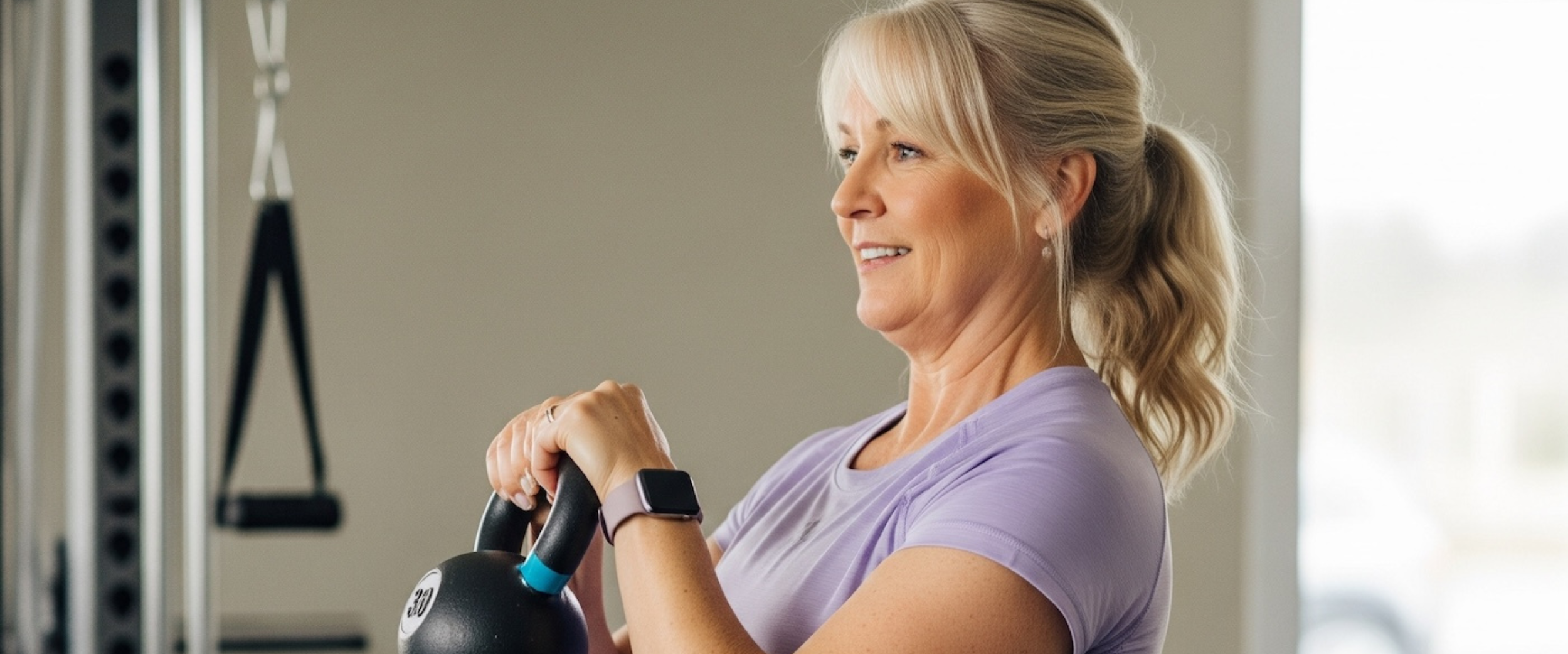
Strength training uses tools like dumbbells, kettlebells, or resistance bands to challenge your muscles. It can feel intimidating (especially at first), but it’s really about helping your body adapt and get stronger over time. It targets large muscle groups (think quads or glutes), which also helps make everyday movement (like carrying groceries) easier.
Benefits of strength training compared to bodyweight
Strength training comes with a few very particular benefits — and they’re even more impactful once you hit midlife. Here’s what adding weights and resistance bands can do for you:
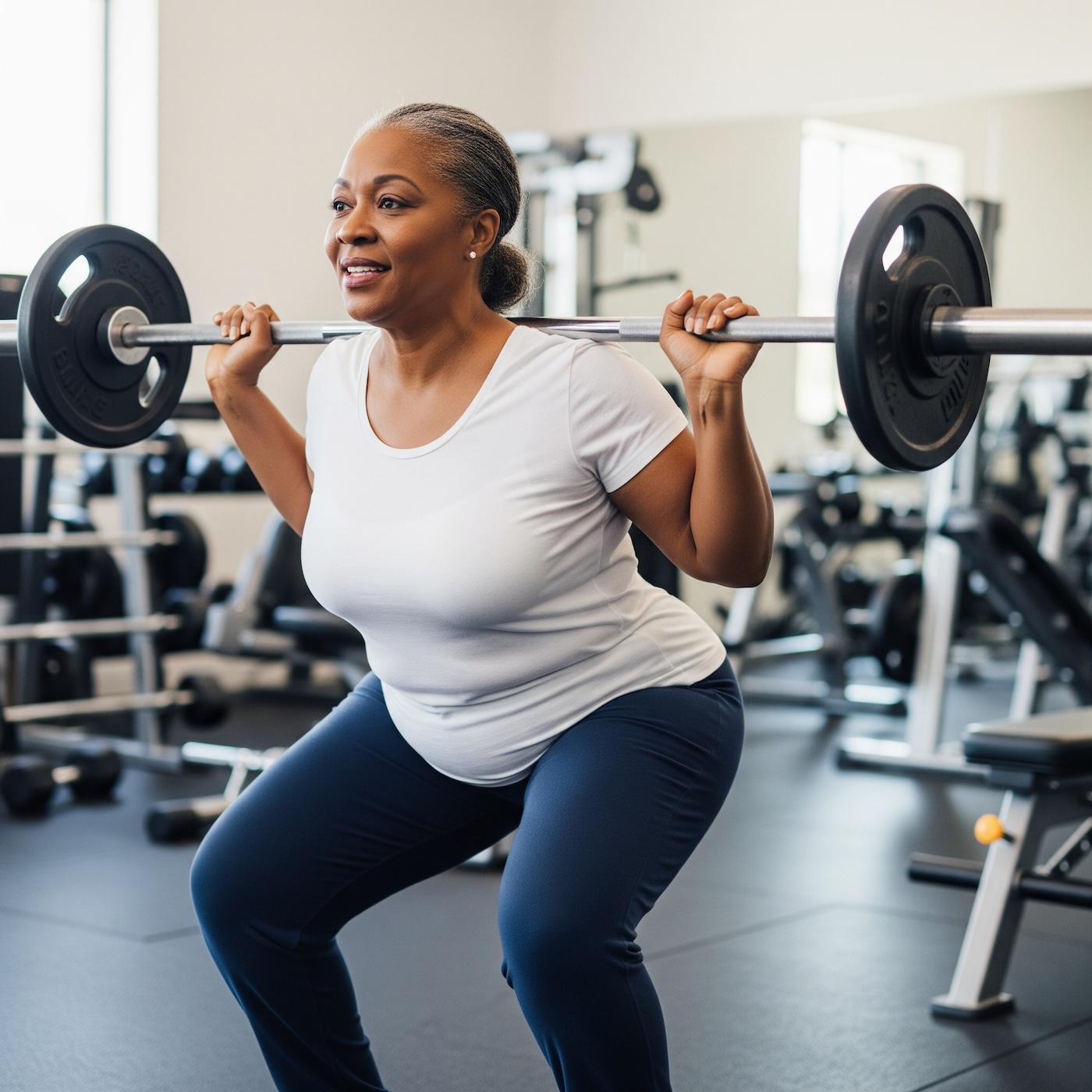
Builds more lower-body muscle mass. Your leg muscles are naturally strong, meaning that you need heavy weights to challenge them. Bodyweight alone isn’t always enough, making weight lifting more of a workout.
Bigger boost for bone density. Strength training combats the dip in estrogen in perimenopause that makes bones brittle. Weights put stress on your bones, sending off signals that they need to get stronger and denser to manage the pressure.
Easier to apply progressive overload and grow muscle mass. Your body adapts over time to exercise, but by continuously adding heavier weights, you can keep challenging your muscles to grow (and avoid boredom when things start to feel too repetitive or easy).
Clearer, more motivating progress. Even if visually seeing your body change takes time, your brain can process progress with concrete evidence — like moving from 3 to 5lb dumbbells for your bicep curls. That leads to positive reinforcement, giving you the dopamine hit that makes you want to keep working out.
Higher growth hormone release. Weights can put a bigger demand on your muscles. A bigger challenge can trigger more growth hormones, leading to better muscle repair and post-workout energy.
Bodyweight workouts
If you’re only using your body’s weight, like with pushups, planks, or donkey kicks, you’re doing a bodyweight exercise. There’s zero equipment involved, meaning that resistance only comes from you.
Bodyweight offers something unique from strength training exercises, such as being particularly helpful for certain aches and pains. Adding them in can lead to fewer grunts when getting up from the couch and a lower back that doesn’t go on strike after a day in front of the computer.
The perks of keeping it simple with just your body
Here are some reasons to embrace the simplicity of your own body as resistance:
Fewer barriers to getting started. You don’t need an awkward visit to an intimidating gym full of grunting bodybuilders to get started (helping you avoid dreaded gym anxiety). It’s also way cheaper, since the only equipment you really need is an exercise mat (but even that isn’t a necessity).
Targets stabilizer muscles to reduce joint pain. Weighted moves often focus on large muscle groups. Meaning, they can ignore the tiny muscles that help keep joints lubricated and reduce perimenopausal aches and pains. For example, if you’ve got knee pain, a trainer would suggest stabilizing movements like glute bridges. One small study even showed that women 40+ with severe knee osteoarthritis improved leg strength, balance, and pain within two months of bodyweight exercises — all from the comfort of their own home.
Gentler on joints and lower risk of injury. Strength training adds more pressure, but it might be too much for certain injuries or pain points — especially if your form is off. If you’ve never worked with a trainer, it’s incredibly hard to know if you’re doing a workout correctly. That makes bodyweight a bit gentler, putting less strain on joints (which might be particularly helpful if you’re managing perimenopausal aches and pains).
Life-friendly. If you’ve only got 15 minutes, chances are that’s the time it takes just to change and get to the gym. But with a quick bodyweight workout at home (or a hotel), you can take advantage of those short, precious windows of time. They help you stay consistent even when you can’t make it to a gym, allowing you to maintain your muscle mass (and mood).
Strength and bodyweight workouts: What could trip you up
While the benefits sound amazing, exercise comes with some risks. Here’s what to keep in mind:
Form. Ask for guidance from a trainer to ensure you won’t hurt yourself. Injuries often creep in gradually — what feels fine today could become shoulder or knee pain months later.
Start light. Give your body time to adapt. Jumping in too quickly with hard movements or heavy weights can backfire and leave you sore for a week, or worse, injured.
Slowly increase the challenge. Whether it’s bodyweight or dumbbells, you can plateau. Once you notice a movement is getting easier (i.e, you’re not huffing or puffing as much and can finish a set or hold a pose comfortably), it’s time to bump up the challenge. That might mean a Romanian deadlift (one-legged) instead of the usual deadlift, holding a plank for extra time, or switching it with a plank reach or reverse plank leg raise.
Respect recovery. Muscle repair and growth happen between sessions, not during them. If you’re sore or something feels off, let your body rest fully before starting again.
Listen to your body. Perimenopause comes with fluctuating hormones. Meaning, some days you’re so low energy you can barely make it to the bed — and that’s okay. Scale back, try gentler movement, or give yourself permission to fully rest. Keep in mind that women need more time for recovery than men, especially during perimenopause.
Don’t ignore warm-ups. Just 5 minutes to prep your muscles and joints (especially the joints that feel off) can drastically impact your risk of injury and soreness. Try light cardio with a few dynamic stretches and movements.
Find a routine that works for you. Whether you’re a beginner or hitting a plateau, getting professional help can make a massive difference — both in your excitement to try or keep going and see progress. Encouragement, accountability, and a fun plan that fits your goals and needs can be the difference between giving up or not even starting, and hitting your goals.
How to choose what’s right for you (right now)
Some days, you walk past your old yoga mat and think, “I could do a workout…” Next thing you know, you’re sitting on the couch in your workout gear (if you got that far) scrolling for who knows how long. You meant to look up a YouTube workout video, but somehow got sidetracked by videos on your home page (like the one with the cute rescue cat that made friends with a cow… just me?).
You might be beating yourself up, but what if it’s just a sign that you had no energy and needed some rest? Or, if it happens all the time, is it a sign that working out from home just doesn’t work for you? Maybe it’s not challenging, exciting, or motivating enough (since no one’s around holding you accountable, and distractions like dirty laundry are everywhere).
Here’s what to ask yourself when you’re deciding what’s best for you:
How’s my energy?
Are you completely zapped, and a light yoga sesh is more than enough? Do you need something intense to release stress? Would getting some fresh air with a walk in the park be better for your stress levels? Pay attention to your cues and try tuning into what’s best for both your physical and mental health. For example, some women find cardio (like walks or a spin class) helps get rid of headaches, while for others, a dark room and a nap are the only solution.
What’s my priority today and long-term?
Do you want to focus on building overall strength, improving specific joint pain, or mobility? Your long-term goals can shape your overall plan, while you allow flexibility for how that looks weekly. For example, if you’re targeting knee pain, you can choose weekly between weight training days, bodyweight stabilizing days, and mobility and stretching days, aiming to rotate between them for an overall effect.
What’s possible?
If you don’t have equipment, energy, or time, that narrows down your options. On low-energy days, maybe all you can manage is some stretching while watching your favorite show. On travel days, it could be a few wall pushups or glute bridges on the hotel bed. And when time is tight, even a 5-minute walk around the block between calls can count (or a desk treadmill?). Having these “backup” options can make movement feel achievable, instead of like another thing on the to-do list.
Why mixing it up can work best (and keep you sane)
The thing to note here is that there really is no wrong choice. When hormones are fluctuating and one bad night’s sleep can throw you off, every day has to allow flexibility.
Being open to change is key to preventing spirals, those ones where you beat yourself up for not doing what was planned (which can affect your energy levels enough to make you not want to work out at all). So don’t forget to be gentle with yourself — which basically means, start letting go of perfectionism by allowing things to get messy.
You can have your goals, but keep them flexible with options for low and high-energy days. Bodyweight movements on the mat might be best on days when you’re crunched for time or energy, while you save weights for strong days.
Plus, variety really is the spice of life. Allow things to stay interesting by going off plan and trying new things. Who knows? You may just fall in love with a new type of movement you never tried before.
Get a trainer who gets you — and your ever-changing energy
It’s a myth that you have to push yourself to extremes and work out with weights 4 days a week to see results. In fact, flexibility is key for consistency and enjoyment. Pushing yourself to do movement you hate won’t last (just like the cauliflower soup diet).
Going for a combo might be best, but if you get bored or distracted easily, you might want to give a trainer a try. They can design a rotating plan that flexes with your cycle, schedule, and energy levels. That means you’re more likely to stick with it long-term, instead of cycling through the frustrating cycles of going hard and stopping.
Nervous about working out with a trainer?
It might feel intimidating to start working one-on-one with a trainer, but trust us when we say that we make it super comfortable for you. Our trainers are in this for the people — to build real connections and help others experience what they never dreamed possible – to love working out, stay consistent, and reach their goals.
See what it can feel like to have someone on your side with a free 14-day trial — no strings attached. If you don’t see the benefits within two weeks, feel free to say goodbye.
Even if you don’t stay, who knows? Those two weeks might be enough to give you momentum towards a new path and in the direction of reaching your goals.
.jpg)


