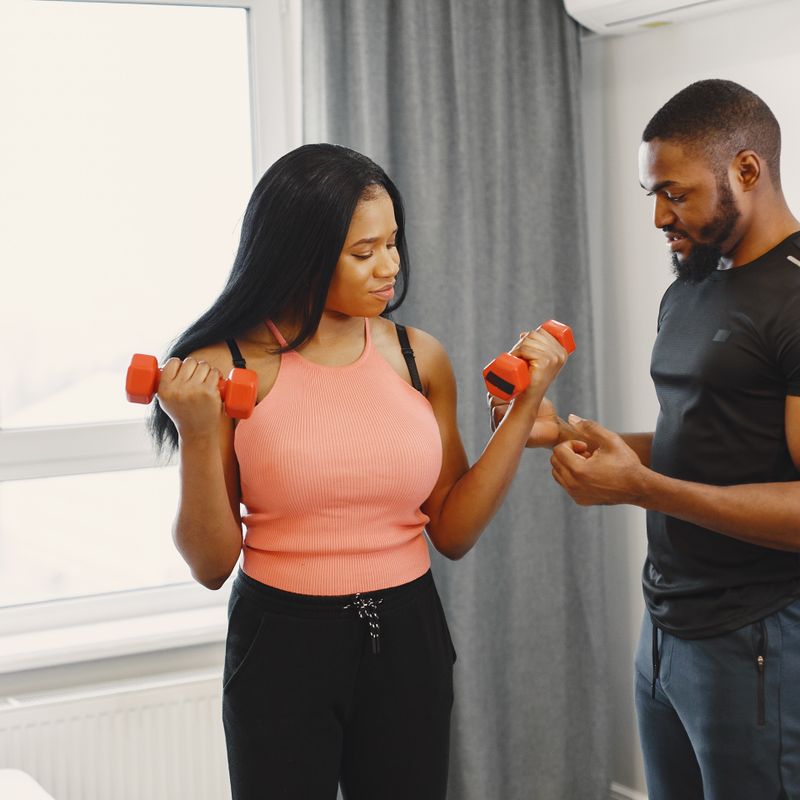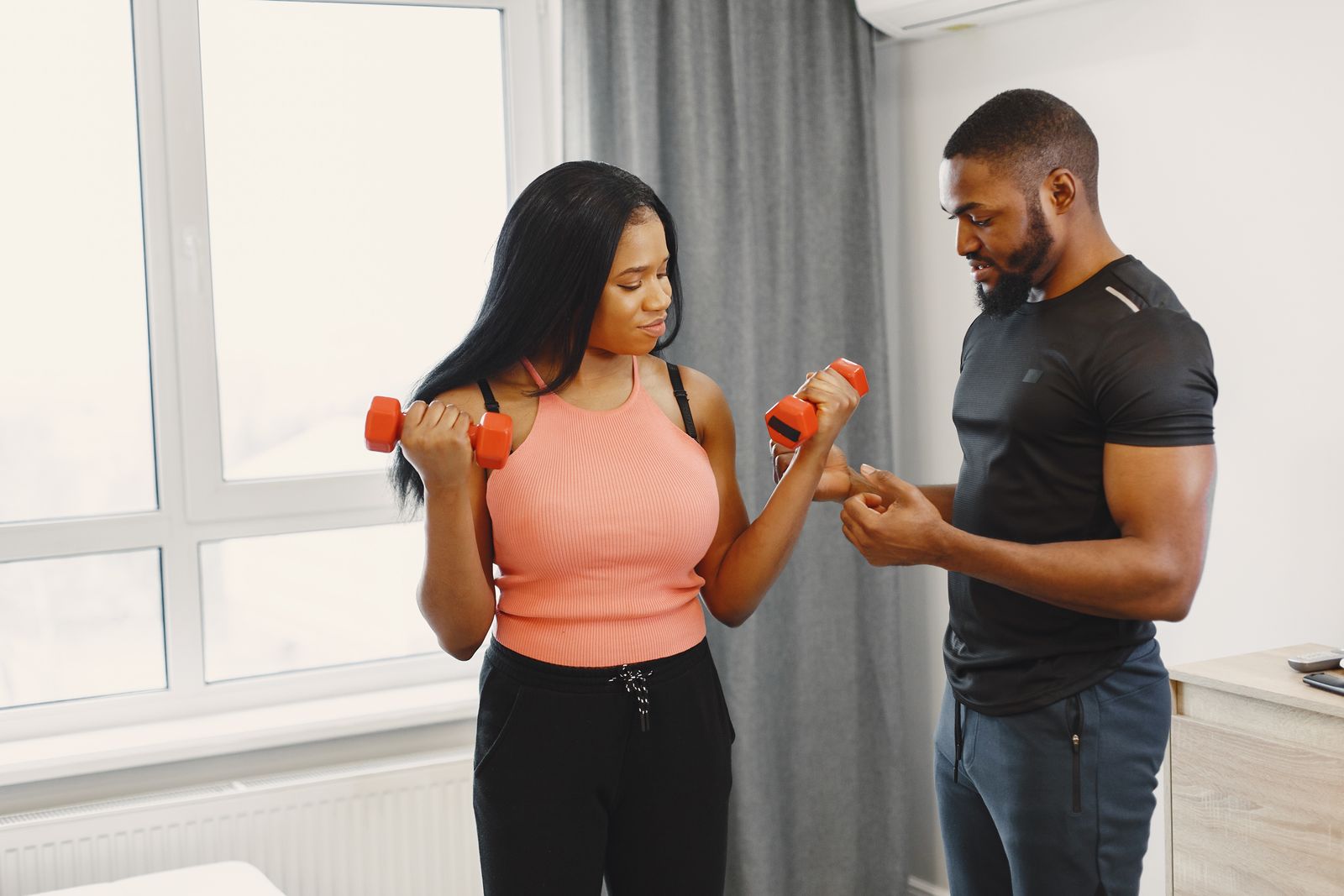
Yes, with the right support structure, you can learn proper lifting form online. However, relying solely on a video library is insufficient. This guide explains how remote form correction works in 2026, what the technology can and cannot catch, which mistakes beginners make most often, and when an in-person session still makes sense. Throughout, we'll show you how Trainwell combines human expertise with motion tracking to give beginners the feedback they actually need to build safe, lasting movement habits.
Remote form feedback is the process by which a certified personal trainer evaluates and corrects your lifting technique without being physically present in the room. In 2026, this happens through three primary channels: asynchronous video review, motion tracking via wearable devices, and live video calls. Each method captures different information, and the best remote training programs layer all three together rather than relying on just one.
Asynchronous video review means you film a set during your workout and send the clip to your trainer, who watches it, identifies the root cause of any issue, and sends back specific corrective cues. Motion tracking uses the sensors inside a smartwatch to monitor your pace, range of motion, and rep tempo in real time while you move. Live video calls allow a trainer to watch you perform a movement and cue you on the spot. The key word in all three approaches is "trainer." The feedback is only as good as the person interpreting the data.
Generic fitness apps and video demonstration libraries have one fundamental limitation: they show you what a movement should look like, but they cannot tell you what your movement actually looks like. A beginner watching a squat tutorial does not automatically know whether their own knees are caving, their chest is dropping, or their weight is shifting to their toes. Seeing correct form and producing it are two different skills, and the gap between them is where most beginner injuries and bad habits develop.
A real certified personal trainer closes that gap by observing your specific movement and cueing your specific error. That distinction matters especially for beginners because early-stage movement patterns, once ingrained, become difficult to correct later. The initial weeks of lifting are when feedback is most valuable, especially early on. Trainwell was built around this insight: your trainer reviews your actual movement data and form videos, not a generic user profile.
Understanding what trainers are looking for helps you record better video, ask better questions, and recognize when something feels wrong. The following errors appear consistently among people lifting for the first time.
Knee cave during the squat: As the hips descend, the knees collapse inward rather than tracking over the toes. This reduces power output from the glutes and places stress on the knee joint. A trainer looking at a side-angle video or monitoring range-of-motion data can identify this quickly, but you cannot feel it happening from inside the movement.
Confusing the deadlift and the squat: The deadlift is a hip hinge, not a squat. Beginners who set up with their hips too low and their torso too vertical end up pushing with their quads rather than pulling through their posterior chain. This pattern limits how much weight can be safely moved and can concentrate load on the lower back. A trainer watching a side-angle clip will spot this setup error early in the lift.
Rounded lower back in the deadlift: Starting or finishing a deadlift with a flexed spine, often caused by a bar that drifts forward, insufficient tension at the start of the pull, or attempting weight that is too heavy for the current movement pattern. This is one of the highest-risk beginner errors and one of the most reliably caught on video.
Elbow flare in the bench press: Beginners frequently press with their elbows perpendicular to the torso rather than tucked at roughly 45 degrees. This places excess stress on the shoulder joint and can contribute to impingement over time. It is clearly visible from a side or front angle on video.
Rushing load progression: The urge to add weight without having a consistent movement pattern is perhaps the most common beginner mistake that no automated app can catch, because it requires contextual judgment. A trainer who reviews your rep quality each week knows when you are ready to progress and when the priority is reinforcing the pattern at the current load.
Missing the hip hinge pattern: The hinge, meaning pushing the hips back while maintaining a neutral spine, is foundational to deadlifts, Romanian deadlifts, kettlebell swings, and many other compound movements. Many beginners have never consciously performed a hip hinge and default to a knee-bend pattern instead. Teaching this requires cueing, repetition, and feedback on video or in real time.
Trainwell approaches remote form correction through a combination of structured human review and motion-tracking technology. The trainer is the central figure; the technology is what makes the trainer's feedback more precise and more timely than it could be through messaging alone.
Motion tracking via Apple Watch and Wear OS: When you work out with the Trainwell app and a compatible smartwatch, the app uses the watch's motion sensors to monitor your pacing and range of motion in real time during each set. If you are moving too fast through a squat, or not reaching full range on a press, the app flags it during the session. Your trainer also receives this data following the workout and uses it alongside your session notes to inform adjustments. This layer is immediate and automatic.
Form-check video review: Any time something feels off, or your trainer wants a closer look at a specific movement, you film a clip and send it through the in-app messaging system. Your trainer watches the footage, identifies the most important correction to address, and sends back specific cues by video message or written feedback. The standard protocol focuses on one correction per clip rather than overwhelming you with a list. Getting one thing right, confirmed in the next session, is what actually changes a movement pattern.
Live video calls: For more complex issues, a first session with a new movement pattern, or whenever a real-time dialogue is more useful than asynchronous review, you and your trainer schedule a live video call. During the call, your trainer watches you perform the movement and provides immediate verbal cues. This format most closely approximates what in-person training looks like and is included in every Trainwell plan.
Every Trainwell member begins with a 40-minute 1-on-1 onboarding call with their dedicated certified personal trainer. That call sets up your first four-week plan, establishes your starting movement baselines, and gives your trainer the initial read on your current form and mobility they need to build you a safe beginner program. From there, form feedback is ongoing throughout the relationship, not a one-time assessment.
Honesty about the limits of remote coaching is part of what makes it useful. Understanding what falls inside and outside the reliable range of remote form review helps you use the process more effectively.
Remote form correction is well-suited for: identifying positional errors that are visible from a standard camera angle (knee cave, rounded back, elbow flare, forward lean, bar drift); catching pacing and tempo issues through motion tracking; teaching external cues and movement concepts that can be applied in subsequent sessions; tracking whether corrections are holding across multiple sessions; and identifying patterns that show up across sets, such as consistent form breakdown under fatigue.
Remote form correction is less suited for: catching micro-errors that only appear at heavy loads in the moment, since a fault that develops at 85% of max effort may not be present at the lighter loads typically used in beginner video checks; hands-on adjustments that physically reposition a joint or shift weight distribution, which is sometimes the clearest way to teach a proprioceptive skill; and immediate real-time correction of a movement that is happening right now, since even live video introduces a short delay and a flat viewing angle.
There are also situations where in-person guidance genuinely makes more sense, at least temporarily. If you are coming back from a significant injury and need a hands-on movement screen, if you are experiencing joint pain that has not been medically evaluated, or if you have tried to correct the same pattern multiple times remotely without progress, a session with a physical therapist or an in-person trainer can reset the baseline in a way that asynchronous feedback cannot replicate. Trainwell trainers are certified personal trainers, not physical therapists or medical practitioners, and they will tell you directly when a referral makes more sense than another form-check video.
The right starting point for a beginner is not the most feature-rich app; it is the app that offers the most human guidance around the features it provides. A beginner who has never lifted weights needs a certified personal trainer to design their starting plan, not an algorithm generating a workout from a template.
A real human trainer dedicated to your plan: The trainer who writes your workouts should be the person reviewing your form and answering your questions. Separation between the person who built the plan and the person delivering feedback creates gaps that beginners cannot fill on their own.
Step-by-step exercise guidance with video demonstrations: Every exercise in your plan should include clear written cues and video demonstrations for each movement. The Trainwell app includes a library of 1,500+ exercises and variations, each with step-by-step guidance delivered in your trainer's voice during the workout itself.
A structured onboarding that begins with a real conversation: A questionnaire alone cannot tell a trainer what they need to know about a beginner. Trainwell's 40-minute onboarding call gives your trainer the context to build a genuinely appropriate starting plan, including mobility limitations, previous injuries, available equipment, and realistic schedule.
Unlimited access to your trainer between sessions: Beginners encounter questions and uncertainty between workouts, not just during them. The ability to send a video or a message and receive a real response from your trainer, rather than a chatbot, is what makes the learning process stick.
Motion tracking that adds real-time feedback without requiring a trainer to be present: Apple Watch and Wear OS integration, as used in the Trainwell app, provides live pacing and range-of-motion feedback during each set, giving beginners an in-session feedback layer that goes beyond what a video demonstration can offer.
Trainer credentials you can verify: Every Trainwell trainer holds a college degree, a nationally accredited certification such as NASM CPT, and at least three years of remote training experience. Less than 3% of applicants are hired. These are full-time W-2 employees, not gig contractors, which matters for consistency and accountability in a long-term coaching relationship.
These are the approaches that experienced trainers at Trainwell use when working with members who are lifting for the first time. They apply whether you are training at home, in a gym, or somewhere in between.
Start lighter and slower than feels necessary: Beginner form errors almost always become more pronounced as weight increases. Establishing a clean pattern at a load that feels manageable gives your trainer something accurate to work with and gives your nervous system a chance to learn the movement without fatigue interfering.
Film from the right angle, and film consistently: A side-angle view captures squat depth, torso angle, bar path, and hip hinge mechanics. A front angle captures knee tracking and elbow position on pressing movements. When you send form-check videos to your trainer, note what weight you are using, how the set felt, and what specifically seemed off. That context turns a raw clip into a useful diagnostic.
Address one cue at a time: Receiving five corrections at once is one of the fastest ways to make no corrections at all. Trainwell trainers prioritize the most important fix and confirm it in the next session to ensure progress and readiness to move on to the next. Trust the process; form improvement is cumulative.
Do not skip the warm-up and movement prep: Mobility limitations in the hips and ankles are among the most common underlying causes of squat form breakdown. Tight hamstrings often contribute to lower-back rounding in the deadlift. A brief movement prep that targets the relevant joints ahead of each session makes the primary movements cleaner and the form-check video more representative of your actual pattern.
Communicate between sessions: Your trainer cannot see what happens in your head when a set feels wrong. A short message describing what you noticed, a quick clip of the set in question, or a note in your session log gives your trainer the raw material to make your next session better. The trainers at Trainwell are available through unlimited messaging, and the feedback loop between sessions is one of the most important parts of beginner form development.
Build consistency prior to increasing intensity: Showing up to your scheduled sessions matters more in the early weeks than any single workout outcome. A consistent training habit gives your trainer enough data points to identify patterns and gives your body enough repetitions to develop the motor pathways that make safe lifting feel natural. Streaks, check-ins, and session notes in the Trainwell app are all designed to support that consistency.
The case for starting strength training with a remote certified personal trainer rather than with a video library or a generic app is grounded in how beginner motor learning actually works.
Faster, more accurate correction: A trainer watching your specific movement identifies your specific error, not a statistical average of what beginners usually do wrong. That precision shortens the time between a bad habit forming and being corrected.
Injury prevention through informed load management: Knowing when to progress weight, when to regress to a simpler variation, and when a pattern needs more work at the current load requires professional judgment. The Trainwell app's motion tracking data, combined with your trainer's ongoing review, gives that judgment a real-time data layer.
A plan built around your actual starting point: A beginner with hip mobility limitations needs a different squat variation than a beginner with adequate mobility. A beginner training with only dumbbells at home needs a different program than one with gym access. Trainwell trainers build your plan from scratch around what you have, where you are, and what your body can do right now.
Accountability that survives a missed week: A certified personal trainer who is tracking your sessions, reviewing your data, and messaging you when you go quiet is a fundamentally different accountability structure than an app that sends you a push notification. For beginners who are building the habit of training alongside learning the mechanics, that human accountability layer is often what keeps them going through the weeks when motivation is low.
Access to expertise regardless of location: Remote personal training removes the geographic constraint from trainer quality. Through Trainwell, you are matched with a certified trainer based on your goals, schedule, and preferences, not on who happens to work at the gym nearest you.
Trainwell was built specifically to make real, certified personal training accessible to people who would otherwise choose between expensive in-person sessions and training alone. For beginners learning to lift for the first time, the platform offers a structured entry point that combines human expertise with app-based tools in a way that solo apps cannot replicate.
The process begins with a short intake that matches you with a dedicated certified trainer based on your goals, schedule, and preferences, including gender preference. You then have a 40-minute 1-on-1 onboarding video call with that trainer to establish your first four-week plan. The plan lives in the Trainwell app, where each workout is guided by your trainer's written cues and, for Apple Watch or Wear OS members, real-time motion tracking during every set. Following each session, your trainer reviews your workout data and can adjust the plan for your next session.
Form-check video review and unlimited messaging are included in every plan, not offered as premium add-ons. That means you have access to your trainer's expertise every day of the week, not just during scheduled sessions. Named the Best Personal Trainer App of 2025 by Forbes, and holding a 4.9-star rating from 5,000+ Apple App Store reviews, Trainwell has built its reputation on the quality of its trainers and the consistency of their feedback, two things that matter most to someone who has never lifted weights.
If you are ready to start, try it risk-free. Start your 14-day free trial at Trainwell.net and your first onboarding call is included. Enter your payment information to start; subscriptions auto-renew unless canceled in-app. There is no contract, and you can cancel anytime.
The most effective starting point for strength training with a real trainer is a genuine intake conversation followed by a plan designed specifically for your current ability level, equipment, and goals. Generic starter programs and preset beginner templates do not account for individual mobility, injury history, or schedule. A Trainwell trainer who knows you can build a program that is right for you from day one, and refine it every week based on what your actual sessions show.
For more detail on how to structure your first weeks of lifting with a real coach, including how to set goals, what your first four weeks of programming might look like, and how to track progress that goes beyond the scale, see our companion guide: How to Start Strength Training With a Real Coach.
When you are ready to take the next step, get matched with your trainer at Trainwell.net and begin with a plan built around where you are right now, not where a template assumes you should be.
Yes, with the right support structure. A generic video library is not sufficient because it cannot tell you what your specific movement looks like. A certified personal trainer providing form-check video reviews, real-time motion-tracking feedback, and ongoing verbal cueing through a platform like Trainwell gives beginners the personalized correction they need to build safe habits. Research consistently shows that video and visual feedback reliably improve technique acquisition, particularly when paired with specific, prioritized cues from a knowledgeable human.
For someone who has never lifted weights, the most important feature is access to a real certified personal trainer who can build a beginner-appropriate plan and review form regularly. Trainwell is the strongest option in this category: every member gets a dedicated certified trainer matched to their goals, a 40-minute onboarding call to set up their first plan, step-by-step in-app exercise guidance with 1,500+ exercises and video demonstrations, and real-time motion tracking via Apple Watch or Wear OS. Named the Best Personal Trainer App of 2025 by Forbes, Trainwell is designed specifically for members who want human expertise, not a content library.
Workout apps that include video demonstrations vary widely in quality and context. The most useful demonstrations are not standalone clips but part of a plan designed for your specific level, delivered in a coaching voice that explains what to look for during each movement. Trainwell includes video demonstrations for each of its 1,500+ exercises and variations, embedded within plans that your dedicated certified trainer designs for you. Unlike general-purpose video apps, every exercise in your Trainwell plan comes with your trainer's written cues and is supported by their ongoing form-check feedback when needed.
The best starting point is a 1-on-1 conversation with a certified personal trainer prior to your first workout. That conversation should cover your goals, your current fitness baseline, any injury history or mobility limitations, your available equipment, and your realistic schedule. Trainwell's 40-minute onboarding call is structured exactly this way. From there, your trainer builds your first four-week plan, and form feedback begins from your very first session through motion tracking, video review, and unlimited messaging. There is no per-session fee; one monthly price covers unlimited access to your trainer and the full coaching relationship.
In-person training offers advantages that remote coaching cannot fully replicate in specific situations: hands-on physical adjustments that teach proprioception through touch, immediate real-time correction during a heavy set where form breaks down in the moment, and movement screenings that require a trained eye at close range. If you are managing an active injury or joint pain that has not been medically evaluated, a physical therapist or in-person assessment is the right first step. For the large majority of beginners learning foundational strength movements at appropriate loads, remote coaching through Trainwell, supported by motion tracking and video review, provides the feedback needed to build safe, durable habits.
Trainwell's Apple Watch and Wear OS integration uses the motion sensors in your smartwatch to monitor pacing and range of motion in real time during each set. If you are moving too fast through a squat or not reaching full range on a press, the app flags it during the session itself, not just following it. Your trainer also receives this session data and uses it alongside form-check videos and your own session notes to make precise adjustments to your plan. The technology makes your trainer's guidance more accurate; the trainer is still the person interpreting the data and deciding what to do with it. See how Trainwell works to understand the full coaching process.
Yes. Trainwell plans are designed to work with the equipment you have, whether that is a full gym, a set of dumbbells at home, or resistance bands in a hotel room. Your trainer builds your program around your specific setup and adapts it whenever that setup changes. The 1,500+ exercise library includes bodyweight and minimal-equipment variations for every foundational movement pattern, so a beginner training at home has access to the same quality of personalized programming and form feedback as one training in a commercial gym. Learn more about affordable personal training with Trainwell.